Key Takeaways
- Young children get ear infections often because the eustachian tubes, the small passageways that drain fluid from the middle ear, are smaller and more level than they are in adults.
- Common symptoms of recurring ear infections include ear tugging, fussiness, trouble sleeping, fever, and trouble responding to quiet sounds.
- Some children get more infections than others because of factors such as age, group child care, fall and winter colds, seasonal allergies, secondhand smoke, and enlarged adenoids.
- Repeat infections or fluid that does not clear can affect hearing and, in some children, speech development, which is when parents may want to look beyond another round of antibiotics.
- Pittsburgh ENT and Allergy Partners offers pediatric ear care in Pittsburgh, PA, including same-day appointments, and families across Western Pennsylvania can request an appointment to find answers for their child.
Ear Infection Causes: Why a Child's Ear Anatomy Makes Infections More Likely
An ear infection, also called otitis media, is an inflammation of the middle ear that happens when fluid builds up behind the eardrum. According to the National Institute on Deafness and Other Communication Disorders (NIDCD), five out of six children will have at least one ear infection by their third birthday, and ear infections are the most common reason parents bring a child to the doctor.
Three parts of a child's body work together to make infections more likely:
- Small, level eustachian tubes. The eustachian tube connects the middle ear to the back of the throat. In children, it is smaller and more level than in adults, so fluid has a harder time draining, even on a healthy day.
- A developing immune system. A child's immune system is still maturing, which makes it harder to fight off infections.
- Adenoids. These small pads of immune tissue sit behind the nose near the eustachian tubes. Sometimes bacteria get trapped in the adenoids, which can lead to a chronic infection that spreads to the middle ear.
When a cold or other respiratory illness swells or blocks the eustachian tubes with mucus, fluid cannot drain. That trapped fluid becomes a comfortable place for germs to grow.
Common Symptoms of Recurring Ear Infections
Most ear infections happen before a child has learned to talk, so a toddler cannot say, 'My ear hurts.' Parents often have to watch for other signs. The NIDCD and the Mayo Clinic list these common ear infection symptoms in children:
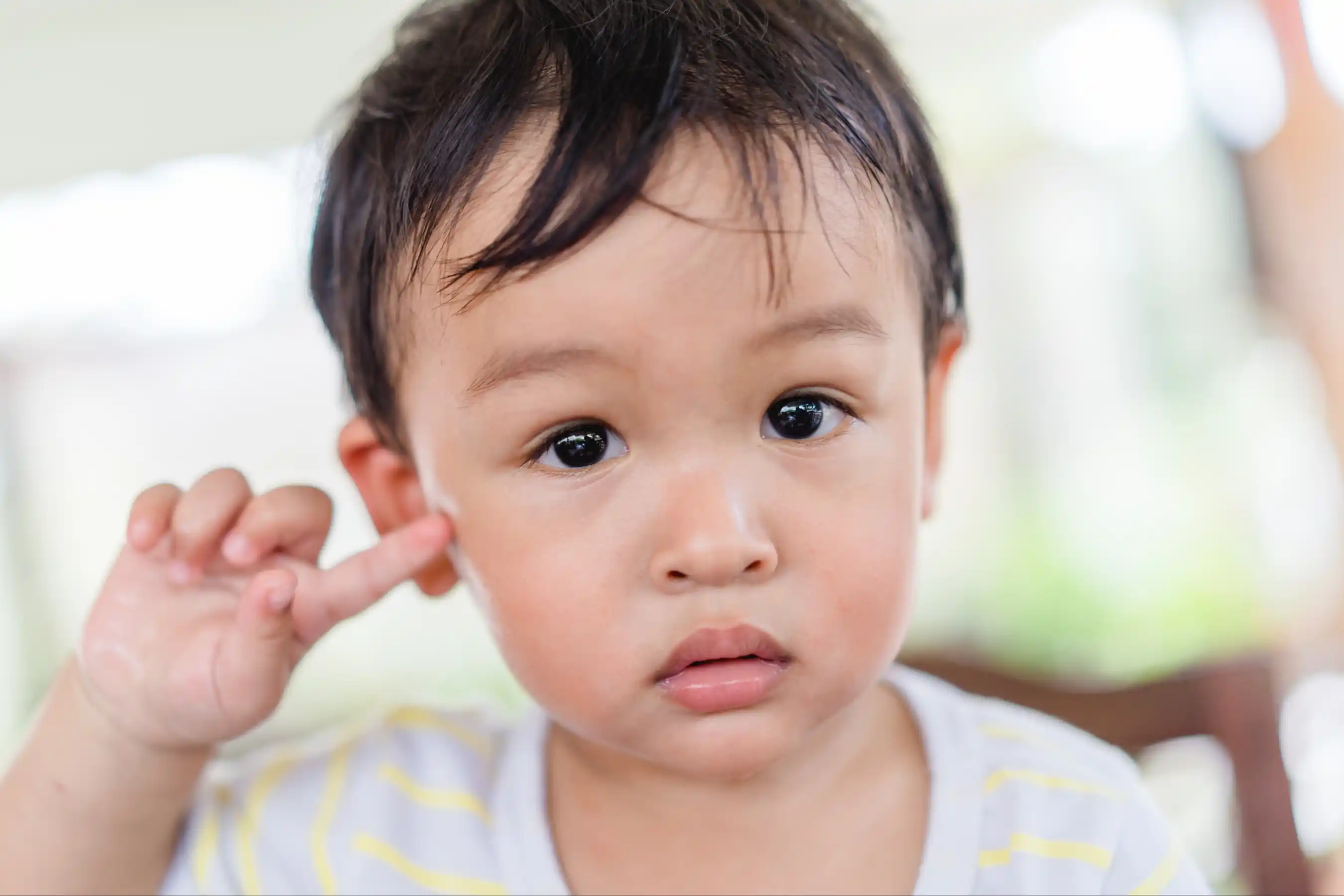
- Tugging or pulling at the ears.
- Fussiness and crying.
- Trouble sleeping.
- Fever, especially in infants and younger children.
- Fluid draining from the ear.
- Clumsiness or problems with balance.
- Trouble hearing or responding to quiet sounds.
Not every ear problem comes with pain. The NIDCD explains that a child with otitis media with effusion, which is fluid that stays behind the eardrum after an infection has run its course, may have no symptoms at all. A doctor can see the fluid using a special instrument.
Why Some Kids Get More Infections Than Others
Two children in the same classroom can have very different ear health. The Mayo Clinic lists several risk factors that explain why some children seem to catch every infection:
| Risk Factor | Why It Raises the Chance of Ear Infections |
|---|---|
| Age (6 months to 2 years) | The size and shape of the eustachian tubes make them easier to clog. |
| Group child care | Children in group settings come into contact with more colds and other infections. |
| Fall and winter seasons | Ear infections are most common in colder months. Seasonal allergies can add risk when pollen counts are high. |
| Secondhand smoke or poor air quality | Being around tobacco smoke or heavy air pollution raises risk. |
| Bottle feeding in a crib | Babies who are given a bottle while lying down tend to have more infections. |
| Enlarged adenoids | Swollen adenoids can block the eustachian tubes and lead to infection. |
Some of these factors, such as age and anatomy, cannot be changed. Others, such as smoke exposure and bottle habits, are things a family can adjust.
When Repeat Infections May Point to a Bigger Issue
Most children outgrow frequent ear infections as their eustachian tubes grow and their immune systems mature. In the meantime, repeated infections or fluid that never fully clears can cause problems. The Mayo Clinic notes that ear infections that happen again and again, or fluid that stays in the middle ear, can cause worse hearing loss, and hearing loss in infants and toddlers may delay speech and development.
T he NIDCD adds that some children have as many as five or six middle ear infections a year. If infections keep coming back and antibiotics are not helping, many doctors recommend a short surgery that places a small ventilation tube in the eardrum to improve airflow and prevent fluid from backing up.
At Pittsburgh ENT and Allergy Partners, the conversation about ear tubes usually starts when a child's history shows a clear pattern, such as frequent infections over several months, fluid that lingers behind the eardrum for a season or longer, or hearing and speech that seem affec ted by ongoing ear problems. The Pediatric Ear Tube page explains the specific guidelines the team uses.
Children in these situations often benefit from a hearing evaluation to see whether fluid is affecting how well they hear. If adenoids are playing a role, the NIDCD notes that removing them may also be considered, especially when ear tubes alone do not stop infections.
What Steps Parents Can Take Next
Frequent ear infections can feel endless, but there are practical next steps:
- Keep a simple record. Note the dates of each infection, the symptoms, and any treatment. A clear history helps a specialist see patterns.
- Talk with your child's pediatrician. Share how often infections are happening and whether they are affecting sleep, hearing, or speech.
- Ask about a hearing evaluation. Fluid behind the eardrum can quietly reduce hearing, even when pain has passed.
- Reduce risk factors where possible. The NIDCD recommends yearly flu vaccines, recommended pneumococcal vaccines, frequent hand washing, avoiding cigarette smoke, never putting a baby down with a bottle, and limiting contact with sick children.
- Consider a pediatric ENT evaluation. ENT stands for ear, nose, and throat. A specialist can look at the full picture and explain whether watchful waiting, ear tubes, or another approach fits your child.
Get Answers for Your Child's Repeat Ear Infections in Pittsburgh
Frequent ear infections come down to a mix of anatomy, timing, and exposure, and many children grow out of them. When infections keep returning, or when hearing and sleep are affected, a specialist can help your family move past the cycle of antibiotics and sleepless nights.
Pittsburgh ENT and Allergy Partners welcomes children of all ages for ear evaluations and ear tube care, and families travel from across Western Pennsylvania for same-day pediatric ear visits. Request an appointment to talk with a specialist about your child's recurring ear infections, or learn more about pediatric ear care and ear tubes before your visit.
Frequently Asked Questions
What causes recurrent ear infections in toddlers?
Toddlers have small, level eustachian tubes that drain poorly, immune systems that are still developing, and frequent exposure to colds, especially in group child care. Adenoids that trap bacteria can also contribute.
How many ear infections are too many?
There is no single number for every child. Pittsburgh ENT and Allergy Partners considers ear tubes for children who have had three or more infections in six months or four or more in a year, or fluid in the middle ear for more than three months.
Can ear infections affect my child's hearing or speech?
Yes. Mild hearing loss is common during an infection and usually improves afterward. Ongoing fluid or repeated infections can cause more lasting hearing problems, and hearing loss in toddlers may delay speech and language development.
What can I do at home to lower my child's ear infection risk?
Keep up with flu and pneumococcal vaccines, wash hands often, keep your child away from tobacco smoke, and never put a baby to bed with a bottle. Limiting time around sick children during cold season can also help.
How can I find a pediatric ENT in Pittsburgh?
Pittsburgh ENT and Allergy Partners, located at 4955 Steubenville Pike, Suite 200, Pittsburgh, PA 15205, offers pediatric ear care with same-day appointments for families who need to be seen quickly. Call (412) 679-7020 or request an appointment online.
